
Most people don’t wake up thinking, Today I might ruin everything.
And yet, that thought hums quietly in the background of a lot of our days.
It shows up when you reread a message before sending it. When you wonder if you came across the wrong way. When you replay a conversation in your head and think, Should I have said that differently? It’s not panic. It’s caution. The kind that comes from wanting to be a good person and not quite trusting how thin the line feels sometimes.
That tension is woven gently through The Mirror Within. The book doesn’t dramatize failure or lean into catastrophe. Instead, it captures something more familiar: the quiet effort of trying to do right while knowing how easy it is to get it wrong.
There’s a difference between wanting to be perfect and wanting to be good. Perfection feels distant and abstract. Being good feels personal. It’s about how you treat people. How you handle mistakes. How you respond when you’re tired, overwhelmed, or unsure. The pressure doesn’t come from ambition—it comes from care.
Many of the poems reflect that sense of being “one mistake away,” but not in a bleak or heavy-handed way. It’s more like an awareness that life doesn’t come with buffers. One decision can ripple. One misunderstood moment can linger longer than expected. That awareness can make you cautious, but it can also make you thoughtful.
What makes The Mirror Within approachable is that it doesn’t accuse the reader of doing anything wrong. There’s no sense of judgment here. The speaker isn’t reckless, and he isn’t self-punishing either. He’s human. He’s trying. And that effort, imperfect, ongoing, sometimes messy, is treated with respect.
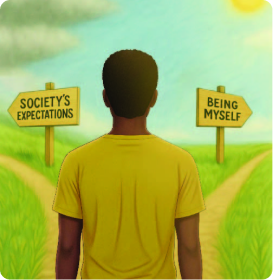
The book understands that the pressure to be good often comes from wanting stability, not praise. It’s about keeping your footing. About not losing yourself. About staying aligned with who you believe you are, even when the world around you feels unpredictable. That’s a quieter kind of struggle, but it’s one most people recognize instantly.
There’s also something comforting in how the poems sit with uncertainty instead of trying to solve it. They don’t rush toward reassurance. They don’t insist that everything will work out neatly. Instead, they acknowledge that most days are made up of small decisions and quiet corrections. That goodness is less about getting it right every time and more about showing up again after you don’t.
The tone of the book reflects that realism. It’s reflective without being heavy. Honest without being harsh. Even when fear appears, it doesn’t dominate the page. It’s simply part of the landscape, like weather you learn to walk through rather than wait out.
By the later pieces, there’s a subtle shift. Not toward certainty, but toward ease. The fear of ruin doesn’t disappear, but it loosens its grip. It becomes less of a threat and more of a reminder: you care, you’re paying attention, you’re still engaged with the work of being yourself.
That’s one of the book’s quiet strengths. It doesn’t tell you to stop worrying or to lower your standards. It simply reminds you that goodness doesn’t require constant self-surveillance. That being thoughtful is not the same as being fragile. That mistakes don’t erase intent.
In the end, The Mirror Within offers something refreshingly human. It suggests that being good isn’t about never slipping. It’s about noticing when you do, steadying yourself, and continuing forward without turning every stumble into a verdict.
And sometimes, that’s more than enough.